Domestic shares and other global markets rose on upbeat trade data from China earlier in the day and after a US House deal extending the federal borrowing authority.

In New York, the dollar edged down against the yen for the first time in three sessions as investors weighed economic data and remarks from outgoing Federal Reserve Chairman Ben Bernanke.

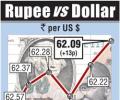
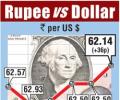
The partially convertible rupee closed at 61.5350/5450 per dollar compared to 61.54/55 on Wednesday.
The headline inflation eased to a five-month low in December on lower vegetable prices, providing some relief to the ruling coalition before a national election and increasing the odds that interest rates will stay on hold this month.

Foreign fund flows into and out of the domestic sharemarket will continue to be key for the rupee's fortunes.
India is due to post industrial output later in the day, with analysts expecting a return to modest growth, and is due to post wholesale and consumer prices data next week amid expectations vegetable prices have eased.
A fall in blue-chips such as Larsen and Toubro on anxiety ahead of the quarterly earnings season and inflation data hurt local shares.

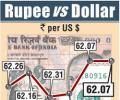
The rupee has fallen 0.8 per cent so far this year, hitting a one-month low on Friday, hurt by a stronger dollar globally as well as caution ahead of key economic data this month.
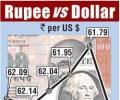
The partially convertible rupee closed at 62.16/17 per dollar compared to 61.79/80 on Tuesday. Financial markets were closed on Wednesday for Christmas.

The partially convertible rupee closed at 61.79/80 per dollar on Tuesday compared with 61.9525/9625 on Monday. The unit rose to 61.78 during the session, its highest since December 18.
.jpg)
The rupee resumed slightly lower at 62.05 per dollar as against the last weekend's level of 62.04 at the Interbank Foreign Exchange market. It recovered to 61.88 per dollar before quoting 61.93 at 1045 hours.
In Singapore, oil prices eased in Asian trade today on a mixed US inventory report indicating tepid demand, while expectations of a return of Libyan supplies also weighed, analysts said.
.jpg)
The Securities and Exchange Board of India (SEBI) unveiled new proposals, broadening the scope of who can be held liable for insider trading violations.
.jpg)
The market regulator is wielding an unprecedented level of control over how mutual funds operate, delaying new launches and dictating investment strategy, frustrated insiders in the embattled industry say.

Traders are now focussed on the upcoming November trade data, due sometime this week, for near-term direction, with consumer inflation data due out on Thursday, which will help set expectations ahead of the Reserve Bank of India's policy review on December 18.
Traders said good dollar demand from importers including oil companies was seen at stronger rupee levels, limiting any further gains.
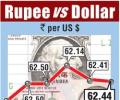
The domestic currency resumed higher at 62.30 per dollar as against the last closing level of 62.41 at the Interbank Foreign Exchange Market and firmed up further to 62.20 a dollar.
.jpg)
Most Asian currencies weakened versus the dollar with the Thai baht and Philipine peso sliding on disappointing economic data.
The concessional swap windows have attracted about $25 billion, RBI deputy governor HR Khan said on Monday.

Most immediately, he pledged to move slowly if needed in winding down an oil window that provides dollars directly to state-run oil companies
 © 2026 Rediff.com - Advertise with us - Disclaimer - Privacy Policy - Sitemap - Feedback - About us - Terms of use - Grievances